SSS Number, ID, and Online Account

PARA SA MGA TAMAD MAGBASA: HINDI AKO TAGA SSS! HINDI NINYO RIN MALALAMAN SSS # NINYO DITO SA SITE NA ITO!

Takte, nakasulat na nga sa unang linya na pumila ako para kunin SSS ID ko, tinatanong ninyo pa ako kung tiungkol sa SSS number ninyo.

Isa kayo sa mga rason kung bakit hindi umuunlad bansa natin.

Philippine Social Security System

Spent a good part of the day waiting in line for SSS ID processing. Realized later that I could make a short yet informative post about it.

I don’t want to insult my reader’s intelligence (which is what, averaging 140? :P ) so I’ll minimize repeating stuff found in the official website.

Continue reading “SSS Number, ID, and Online Account”

Graphics Card Hierarchy Chart

Aside from PSUs another source of confusion for normal consumers buying PCs is the graphics card. For normal desktop use, any cheap graphics card will do as long as the card fits in the motherboard (AGP or PCIe) and monitor (VGA or DVI-I or both). For gaming however, the graphics card spells the difference between smooth and choppy gameplay.

Aside from PSUs another source of confusion for normal consumers buying PCs is the graphics card. For normal desktop use, any cheap graphics card will do as long as the card fits in the motherboard (AGP or PCIe) and monitor (VGA or DVI-I or both). For gaming however, the graphics card spells the difference between smooth and choppy gameplay.

When I try to explain in the past how to buy graphics cards, I’d mention the naming scheme used by both nVidia and ATI/AMD: the final 3 digits determine the intended market of the card (e.g. an nVida 8200 will be for entry level machines while an 8800 will be for gaming) while the rest of the numbers determine the generation of the card (e.g. an ATI HD4850 is 5 generations higher than an ATI 9800). While simple, I find that this is still confusing to many.

So for this post, I’ll just point you to Tom’s Hardware‘s Graphics Card Hierarchy Chart.

Continue reading “Graphics Card Hierarchy Chart”

Importance of Good PSUs

For most people, the Power Supply Unit (PSU) of a personal computer is just an afterthought, usually just getting a generic PSU when building a PC. Unfortunately, they’re missing a couple of important considerations when picking PSUs:

Generic PSUs always cheat on their “rated” power.

In other words, don’t expect a generic “500W” PSU to supply 500W of steady power to your computer. Corsair (who sells high quality PSUs made by Sea Sonic) even made a video of them pushing generic power supplies to just 75% of their limit:

Why a high-quality PSU is an essential purchase

Think it’s just a marketing trick from a PSU seller? Unfortunately, it’s not. Some power supplies, especially generic ones, do crash well below their rated power. For example, this power supply crashed at 75% load, with the second sample not even passing the 50% load test (another victim of HardOCP’s rigorous testing).

Cheap power supply makers usually cheat by put a lot of amperes (simply put, watt = ampere x volts) on the 3.3V and 5V rails of the power supply and allocating relatively less on the 12V rails. Now, modern PCs use the 12V rail for most of their components. Therefore, this technique allows the makers to rate the PSU’s power output higher than what the PSU can actually provide the PC.

You could easily verify this by comparing the label of a generic power supply with the label of a “brand name” power supply, say from Enermax, with similar rated power. The brand name PSU will have a much higher amperage at the 12V rails than the generic power supply.

In short, don’t even think of buying a generic power supply if you’re planning to build a gaming rig.

Cheap power supplies are less efficient.

Generic PSUs are cheap because they don’t have the same features as their brand name counterparts. They won’t have power factor correction and they will not reach the same amount of efficiency as the latter.

The thing about efficiency is that even just a 10% difference in efficiency of power supplies can affect your electricity bill, especially if that computer is on 24/7.

Cheaper power supplies are also more likely to fail than their counterparts because the former is made of lesser quality (cheaper) components. Reliability is an important factor for PSUs: anybody who has tried to troubleshoot a PC with weird problems (won’t boot up, suddenly shuts down) will know that it’s hard to isolate the problem to the PSU. (Not to mention that PSUs blowing up can damage the more expensive parts of the PC.)

Let me end this post by saying that there is nothing wrong with getting a generic power supply if your PC is the stereotypical “pang-Word at pang konting Internet lang” family PC. But if you’re planning to add some power hungry components like video cards, or if you’re planning to have your computer run 24/7 downloading torrents, you might want to invest in slightly more expensive PSUs.

As a side note, if you’re planning to build a PC (or if you don’t have an APC UPS), you can use eXtreme Power Supply Calculator to estimate power usage. Just remember that the wattage there would only be applicable to non-“cheating” power supply makers who rate their PSUs properly.

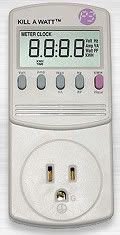
Kill-a-Watt Alternative For Measuring Energy Consumption

Kill-A-Watt Hardware enthusiasts know that Kill-A-Watt is the device to use for checking power consumption. A lot of people/sites use this device, from blogger Jeff Atwood to hardware site HardOCP.

Unfortunately for us here living in the Philippines, Kill-A-Watt is out of the question. Not only is it difficult to import electronic devices without paying hefty customs fees, one should also take note that there are no Kill-A-Watt models which support 220V yet. (No, don’t tell me the obvious solution with a 220 to 110 transformer and a 110 to 220 transformer. Just… don’t.)

Just when I thought there was no other way to determine the power consumption of my computer aside from buying a bulky submeter, I stumbled upon a thread in TipidPC.com where a guy suggested an alternative to Kill-A-Watt.

Continue reading “Kill-a-Watt Alternative For Measuring Energy Consumption”

Fitness and Personal Finance

I find it odd that I failed to mention the relationship between Finance and Fitness in last night’s update of About This Site. It’s odd in the sense that these two seemingly unrelated categories share the same basic principles.

The most important thing! Spend less than you earn! The most basic principle for personal finance is Spend Less, Earn More. For physical fitness, it’s Eat Less, Exercise More.

The similarities don’t stop there. Both basic principles are simple yet difficult to apply in real life. This often results in people getting into get-rich-quick scams (for finance) or trying out fad diets (for fitness) in the hopes of skipping the hard parts. However, time and time again, these two principles are often the only reliable means for people to reach their goals in personal finance and physical fitness.

Speaking about goals, both categories also require you to define realistic goals. Not only does this prevent you from the inevitable disappointment you fail to reach your goal, this also forces you to assess your situation and your target. Maybe your situation is more dire than you expected, or maybe you really don’t need to worry about your situation; either way, finding your starting point and your goal in both personal finance and physical fitness will allow you to determine the correct steps needed to get you where you need to go.

Even on the micro-level, there are still similarities between the two categories. Logging of all expenses and calorie counting are both very tedious tasks and yet they are among the most reliable ways for you to determine where you can trim off excess expenses/calories. Heck, these two tasks are so similar that you could probably log your calorie intake in a personal expenses logging software and vice-versa!

Another similarity is the importance of changing the way you think. You should change your perception about yourself by taking reality into account e.g. ignore how the media portrays “fitness”, you really don’t need to buy that gadget no matter how shiny it looks, etc. You should also understand that being both fit and financially stable requires a long term change in your lifestyle and not just a temporary one.

Of course, there are differences between fitness and finance, but my goal for this post is just to relate the two. You can’t blame me for not pointing the differences out. :P

(picture source: The Simple Dollar)