It’s been almost 3 months since the initial lockdowns and here are some of my thoughts on the pandemic.
—
The whole “this wasn’t the apocalypse that we were looking forward to” meme referring to zombie apocalypse and nuclear holocaust “fans” was sort of amusing.
Simply put, this is one of the few calamities that I have actually prepared for, albeit accidentally.
Much of my work and recreation doesn’t require getting out of the house, and I’ve learned to reduce my need for social interaction. My habit of getting premium equipment and backup alternatives also meant I don’t need to go out to buy things often.
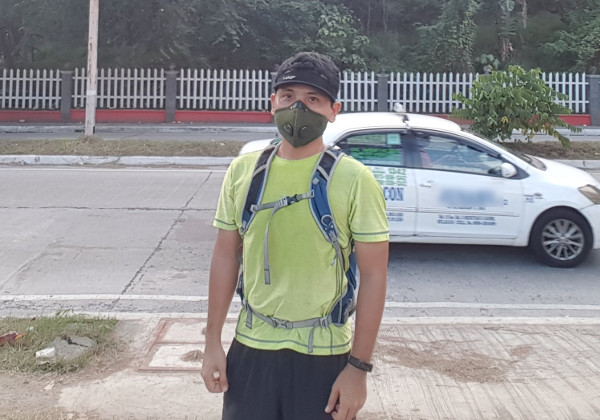
I’ve even got random stuff that ended up being more useful in the situation. For example, that expensive mask I got for running – I switched out the filter for a carbon-filter one which I happened to buy and never got to use until the Taal Volcano eruption.
Another is the rechargeable beard clipper I got for my beard; it came with hair guards equivalent to No 5 and below. I was able to give myself the pandemic buzzcut that’s fashionable nowadays. /s
—
I can’t comment on the disease itself since I’m not an Epidemiologist. I am however, a software developer and I deal with large data sets all the time.
And pretty much all of the data shown on the news is useless from a data analysis standpoint.
Don’t get me wrong, death statistics have to be taken seriously, but the usual “Tested Positive, Recovered, Deaths” that’s been plastered all over the news is insufficient to make any informed decision from a data analysis perspective. Here’s just a small fraction of the problems with this “data”:
Tested Positive – most common flaw: the total number of tests performed is not mentioned, obscuring the infection rate. Another obvious flaw: calculating the percent of the country’s/municipalities’ total population infected/tested is left to the viewer. Other problems include not showing the breakdown of how many were tested via contact tracing (hints how the infection really spreads), and the test kit false positive/negative rate (hints the correct combination of test kits to use).
Recovered – the time of recovery (minimum, maximum, average) is never mentioned even though this can tell the public the actual severity of the infection. Also, the criteria for recovery is vague – what tests are done to categorize a patient as recovered.
Deaths – the criteria for counting a death is inconsistent among sources, basically there’s no strict rules whether to combine people who died from the disease and people who died with the disease. Patient privacy is important, but to make sense of the death statistics, we must know how these people died so agencies can make better treatment protocols, as well as decide which portion of the population to impose further quarantine measures on.
I could go on and on. And yes I’ve seen the EndCoV.ph site, but no it’s still not enough data.
You might say, “it’s ~500,000 tested and ~26,000 confirmed cases; there’s no way the public can handle that data, let alone a single software developer without a ‘data analyst’ title.”
To be frank, that amount of data is pretty small especially in this age of cloud computing. In fact, 26k data points is just a lazy Tuesday morning for me – finding the right terminology and tone for the report would actually take me far more time.
That’s just a software dev speaking. Think about what a real data scientist can do given full access to all of the data.
—
So why are these government institutions and news agencies disseminating such poor quality data?
I’m going to defer to Hanlon’s Razor here and assume at least 50% of it is due to plain incompetence, with the rest to further the narrative or agenda they wish to promote.
Except for US and US-aligned mainstream media.
That’s all definitely narrative pushing, seeing how quickly news about the pandemic plummeted due to the riots. And it’s going to be worse as we approach the November elections.
Lobotomy Corporation: a humble Korean indie game that earned a place in my top 5 computer games of all time, beating the likes of StarCraft and Nier Automata. Also a very janky game that I cannot recommend to anyone other than the most passionate cosmic/metafiction horror fans (e.g. people who have fell into the SCP Foundation rabbit hole).
In honor of its sequel’s Early Access, I’ve decided to be a bit productive and take this opportunity to practice voice over work as well as proper non-linear editing; most of my previous video “editing” work was mainly just syncing and compositing multiple sources.
Biggest takeaways from this exercise:
I’ve got a harsh lisp when I’m speaking English. Not much of a problem for Tagalog or even Japanese, but the amount of variations of TH/S/Z sibilant sounds in the former makes it too obvious. There are workarounds to this problem, but unfortunately I only found the better ones after I made the video.
Unless you’re deep into a specific editing workflow (e.g. Adobe Premiere), it’s hard to suggest any editing software other than DaVinci Resolve. Sure it’s got some kinks here and there, but at the end of the day it’s a free editor with a ton of pro-level features.
Video essays require gigs upon gigs of footage and b-roll, which means I have to edit directly on my NAS. As much DaVinci Resolve’s local caching helps speed up things, I’ll have to seriously consider upgrading to 10Gb networking if I’m going to do more of these in the future.
With the global pandemic keeping people in their homes for weeks, I got around to thinking what I, as a person who had experienced months/years long stretches of unemployment, would suggest people do to pass the time without going outside.
Some quick maths:
Let’s assume 8 hours of sleep as there’s no reason to skimp on that when you’re on lockdown. Then 2 hours minimum for daily rituals – eating, bathing, laundry (assuming the whole household shares the chores), etc.
14 hours a day, multiplied it by 31 and we get 434 hours which could be rounded down to 400 hours.
So what can eat up 400 hours?
This leads us to why I had to add “unproductive” as a restriction: learning and practicing new skills can easily eat up all of those 400 hours as long as you have the passion and drive to work through the learning humps along the way. Similarly, time will quickly pass by if you use your own existing skills to create something you’ve always wanted but didn’t have the time before. Heck, mundane stuff like cleaning your room can take longer than you expect.
On the other end of the spectrum, I had to add the “” to exclude the most unproductive activities, namely spending all day on social networks and pollute your mind with fake news/outrage about the pandemic. Though after writing that down, I guess this would also include watching the mainstream news which has by now degraded to “all the clickbait about COVID-19 that you want to see”.
Anyway, back to the question at hand…
—
Computer gaming is an obvious answer. You can spend thousands of hours on your favorite game/genre, just ask any MOBA or Battle Royale player.
It’s 2020, though: video game developers have figured out that the limiting factor for most gamers isn’t money or hardware – it’s the fact that people only have less than 5 hours of free time a day. This limited nature can be exploited to enticing people to spend money rather than grind in-game for rewards.
But now you have people with a lot of free time on their hands and no reason to spend cash on non-essential things.
Long story short, you can take advantage of this exploitative trend and easily consume an entire day just by fulfilling the “daily” and “weekly quests” of 5 free-to-play/gacha/lootbox/microtransaction games.
Maybe you’re not keen on supporting money-grubbing game publishers that overuse these tricks. Or maybe you’re not confident that you’ll have stable internet for the next few months. What else can you play aside from online games and gacha?
JRPGs average around 50 hours, with some taking up to 100 or more. Go dig up your PS2 and borrow Persona 3 FES and Persona 4 from a (hopefully uninfected) friend
I know it’s a simulation game, but the Civilization series deserve special mention as the archetypal 4X “One more turn” game. Civ III and Civ IV are cheap, while Freeciv (open source game based on Civ I) is free for download. You can even play the latter on your browser.
—
Apart from gaming, the next obvious choice is streaming. Go clear your “To Watch” backlog then let the algorithm suggest new stuff for you.
If paying for a monthly subscription isn’t for you, there’s always YouTube. In fact, when I asked myself what can eat up 400 hours, the first thing that came to mind was Critical Role.
Critical Role is a weekly web show “where a bunch of nerdy-ass voice actors play Dungeons and Dragons”. Episodes average around 4 hours long and they just recently hit their 5 year mark. This gives you over 700 hours of content even if you skip the intros and breaks.
However, I didn’t mention Critical Role earlier due to a couple of reasons. First off, gaming is arguably more engaging for many people than simply watching something.
More importantly, though, it’s a very niche recommendation.
If you’re familiar with tabletop role playing games, it has a good chance of hooking you as it shows what top-tier RPG gaming looks like, something that has always been described in books or articles but never been seen on video before. The cast being voice actors also add another layer to the show; they may not be A-list or even C-list celebrities, but you’ve probably heard some of them in your favorite video games, cartoons, or dubbed anime. Their acting chops also mean that they often stay in-character in critical moments, further enhancing the immersion.
That said, if you have no interest in TRPGs nor do you care about voice acting, Critical Role’s probably not for you.
Even not counting CR, your average YouTube content creator who has been constantly uploading content for over 5 years will have at least a hundred hours of content. Find a channel that talks about something that interests you, watch a few of their videos then binge the rest if they suit your palate.
Here’s a small sample of the channels I’ve binged in the past few years:
RedLetterMedia – initially popular for the then-groundbreaking Plinkett reviews, they’ve followed it up by posting movie reviews and doing bad movie viewings. While pretty much every movie review channel does the same thing, they stand out by being professional (sort-of) filmmakers themselves giving them insights into movie making that the others don’t. They also prefer to be consistent rather than worry about trivial stuff like subscriber counts.
Bon Appétit – formerly just an obligatory YouTube channel for a respected food magazine, a couple of hit “shows” with clever editing (It’s Alive with Brad, Gourmet Makes) transformed it into a “The Office“-like sitcom, with editors, writers, test kitchen staff, and production crew as the “cast”. It’s still a good cooking channel underneath, but everyone’s really after the meta-icing on the top.
Forgotten Weapons – there are gun channels, those that examine guns, take them apart, and shoot them. And there are history channels. But there are only a few gun history channels, ones that talk about both guns and their role in the history of warfare. What’s great about this channel is that while Ian McCollum can be subjective in describing guns and how they feel when shooting, he’s very objective in their politics and history.
Brady Haran’s educational video channels – other science channels present either bite-sized summarized content or very verbose discussions. Brady’s content tends to hover around the sweet spot – not too short that other points are glossed over, but not too long that it gets boring/repetitive.
I used to watch Let’s Play channels like Game Grumps, but I can’t recommend them anymore as most of them have trouble with juggling being entertaining and actually playing the game. Nowadays, I’d rather watch highlight videos for entertainment (eg. TheRussianBadger) or speedruns/edited long plays for gameplay.
Before I move on to the last option, I have to mention that “sailing the high seas” is definitely an alternative to streaming series and movies, especially those not available in local streaming services. Sure, it can be legally ambiguous, but if your internet breaks down and there aren’t any available repair techs in your area due to the quarantine, you’d be glad to have gigabytes of locally stored media to stave off boredom.
—
“Written work” wraps up this list of obvious time eating options.
E-books are reasonably cheap and I won’t be surprised if Amazon and other e-book companies offer discounts in these trying times. You can also legally get free e-books in sites like Project Gutenberg.
Then there’s web novels, self published work where writers upload chapters one at a time. While we’re at it, let’s include fanfiction which follow the same format.
Literary snobs may scoff at these two as they often lack proper editing and, to put it bluntly, most of them are shit. But I have to include them here because of their length.
The average person can leisurely read about 100,000 words a day, maybe 200,000 if totally focused on the text. With the average fantasy/sci-fi paperback running around 100,000 words, you can finish one novel in a day or two.
Web serials can run in the millions, easily matching their published book series counterparts. For example, Worm clocks at 1.68 million words. You can spend weeks bingeing on web serials and there will still be content to read.
Written media’s biggest advantage over the previous two is it’s size: you can fit more novels in the same space as TV series, movies, or (non-retro) games. Spotty internet won’t bother you as much as in the other options.
We can’t talk about written work without talking about comics. They sit between what’s generally accepted as written work/literature and movies/TV series. They don’t have the small data footprint of the former, but with proper compression techniques, a single TV episode can be equivalent to a dozen graphic novel volumes.
And that’s my list. In hindsight, all of these are too obvious, and you probably will be doing a combination of these three, hopefully with some “productive” stuff in between.
I’ve noticed that audio doesn’t get as much attention as other parts of a PC system, which is unfortunate since sound makes up a significant portion of multimedia experiences. Because of this, I’ve decided to write down my thoughts on the subject based on my decades of experimentation.
This series will be split into multiple parts. In this first entry, I’ll talk about my PC audio journey starting from my first PC.
I’ve noticed that audio doesn’t get as much attention as other parts of a PC system, which is unfortunate since sound makes up a significant portion of multimedia experiences. In contrast, the other more popular topics offer either less significant benefits (e.g. mechanical keyboards) or worse, mostly appearance oriented “improvements” (e.g. water cooling). So I’ve decided to write down my thoughts on the subject based on my decades of experimentation.
This series will be split into multiple parts: first, I’ll talk about my PC audio journey starting from my first PC. Then we’ll go into a buyer’s guide where I give part recommendations based on usage and price range. And finally, I’ll discuss my current audio setup.
Two years ago, I started working on being fit. I had gotten out of shape after years of being both broke and depressed. A routine checkup showing a higher than normal blood pressure finally convinced me to turn things around.
To tell you the truth, 80% of what got me into shape was a change to a higher-protein diet. And if I only focused on getting more sleep, I’d be in a much better shape than I am right now.
But of course, tasteless chicken breasts and sleep is boring. You can’t copy it in the hopes of adding it to your Instagram. So let’s talk about the last 20%: my exercise regimen.
After doing a bit of research, I found that I couldn’t fit in gym with my schedule. I work early shift so early morning gym would mean going there at 3-4AM, and post-work gym would mean that once I finish working out at 5 or 6PM, I’d get stuck in traffic rather than have a relatively quick 45 minute one-way commute had I gone home at 3 or 4.
The traffic constraint lead me to my main exercise routine: Urban Hiking. It’s what I call going from BGC all the way to my house 7.5km away. I don’t want to call it “running”; while I typically run 4-5km of the route, the hills, varied running paths, and the cars make it very hard to run all the way, especially for a person like me who has no interest in being a runner.
The lessons I learned from being an urban hiker will be in another blog post. For now, let’s go with something more interesting: my workout gear.
After 2 years of half-assed training, I determined the best combination of equipment for me:
Osprey Talon 11 v1 – The key to my afternoon hikes. Without this trail running pack, I’d be limited to just walking home. Sure, I can just leave my clothes in the office and run unencumbered like everybody else, but I’m too lazy to shuttle extra clothes on non-running day. Finding trail running bags can be hard, but thankfully R.O.X. sells Osprey bags and they’re just a couple of blocks away from my office.
Halo Sport Visor – I sweat a lot. My initial attempts at running had me stopping multiple times to wipe my forehead and eyes clear of sweat. A headband would solve this problem, but this isn’t the 80’s so I went with a “visor” that’s actually more of a headband than a visor. At this point, the sweat channels have peeled off (the logo is peeling off too) but it’s still functional as a headband and a visor.
Respro Ultralight Mask – it’s a running mask. I’ll be writing a more in-depth review on it in the future.
Random cheap dri-fit – for a long time, I was content with just using whatever t-shirt I was wearing for work. Eventually, having a damp sticky back became too annoying and I decided to just get a couple of cheap dri-fit shirts at a nearby running goods store.
Random dri-fit pants – same as shirt, but the pants came from multiple places e.g. Runnr, Under Armor, etc.
Sunscreen – I’m already dark skinned and I’m not under the sun for that long so sunscreen’s a mixed bag: on one hand, it’s kinda annoying to apply and attracts dirt; on the other hand, less chance of getting skin cancer.
Knee support – I rarely use this, but I have it ready for the moments that I feel anything funny on either of my knees. Better safe than sorry.
Generic 500ml water bottle – initially, I thought I needed 1L of water because I was sweating too much. Turns out, that is too much and I can’t run with a lot of water in my stomach. 500ml is ok, and recently I’ve been adding a bit of salt and sugar in the water (because electrolytes).
Running Shoes – no, these aren’t my running shoes. I didn’t show them here because I haven’t used them long enough to properly review them. But having running shoes is a given.
Grip Power Pads – my “warm up” consists of me doing sets of pull-ups and chin-ups at Track 30th. While it doesn’t feel right to complain about a free public exercise area, I have to say that the pull-up bars are pretty bad: they’re uneven and thin making exercises more painful than usual.
After a year and a half of tolerating the pain (and getting some cool callouses in the process), I finally gave up and bought some cheap pads while I shipped something from Amazon. With this I can finally do some straight bar dips.
Osprey Hi-Visibility Raincover – one of the downsides of carrying a bag while running is that I can’t run when it’s raining; I have to get my umbrella out and walk the rest of the way. Osprey has rain covers but R.O.X. doesn’t sell them locally so I had to import this one via Amazon and Johnny Air Cargo.
It works well, and I even got some personal bests running in the rain (apparently overheating is my main weakness even though I sweat a lot). Heavier rain will still seep into the bag, but it’s not a problem since the bag itself is water resistant.
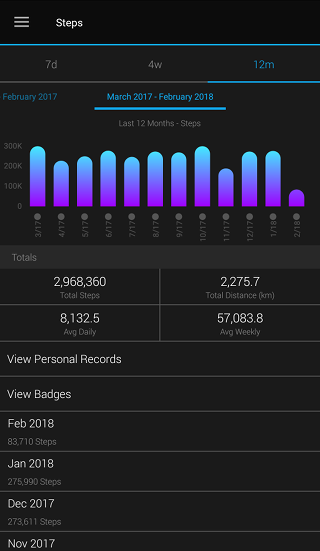
Not pictured is my vivosmart HR fitness band. In my hikes, I mainly use the heart rate monitor to guide me to the (in)correct heart rate zone of 160-180 for anaerobic fun (the correct heart rate for running is 130-150). The step counter and sleep tracker are automatic so I don’t really use (i.e. activate) them, and they provide useful stats. Apart from that, I don’t treat this device as any more than a watch, though having an extra buzzer for early morning alarms and call notifications is also appreciated.
I walk more than a marathon every week
Here are some stuff that isn’t my gear anymore:
Hand towel – for sweat. Didn’t have to use it as much once I got a headband/visor so I stopped bringing it.
Shades – turned out too annoying to wear, not to mention that the pair I got somehow made things look weird or distorted like a pair of incorrect prescription glasses. Wearing a visor is more than enough to block out most of the sunlight anyway.
Earphones – some people think running without music is too boring. Some people need tunes to pump them up and encourage them to go the extra mile.
Some people aren’t running in busy roads with stretches of non-existent sidewalk and the occasional counter-flow bikes coming in from behind.
And there’s my loadout. As mentioned above, had I focused on my sleep patterns last year, I might have lost more fat and gained a lot more muscle. However, I’m still very happy with my progress overall as my legs are a lot sleeker than they used to and that 5km walks are practically nothing to me right now.