Usability and The Reservoir of Goodwill

As much as I’d like to go back to talking about management and software engineering (to scare away the people who stumbled upon my site because of the incoming links), DDB “damage control” people decided to submit their entire freaking FAQ as comments to two of my posts.

Now that gives me a good reason to continue talking about their site while bridging the gap between this issue and software engineering. :D

Practically the main reason why people are skeptical about the Ako Mismo website is its lack of usability.
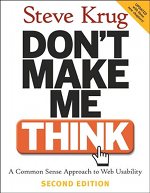
Don't Make Me Think Now, when we talk about usability, the first reference book that would come into mind for many web developers is Steve Krug’s Don’t Make Me Think. The book covers the main issues on usability faced by websites and does this by being clear and non-technical and by using pretty pictures. In other words, the book’s a perfect for people interested in improving their site’s usability but would be intimidated by Jakob Nielsen’s useit.com or Edward Tufte’s books.

As with most decent software engineering or web design books, you probably won’t find this book in local stores. A former colleague told me that Fully Booked carries this book sometimes though I haven’t verified it myself. You could try making a special order from local bookstores for it but that would lead us back to the book blockade thingy. =/

Fortunately, there are free chapters of the book available on the net. One of those chapters is available in the Adobe Design Center: Usability as common courtesy.

Usability is about building clarity into Web sites: making sure that users can understand what it is they’re looking at — and how to use it — without undue effort. Is it clear to people? Do they “get it”?

But there’s another important component to web usability: doing the right thing — being considerate of the user. Besides “Is my site clear?” you also need to be asking, “Does my site behave like a mensch?”

Steve Krug starts the chapter with a story about how, after being concerned that a union strike will affect his flight, he visited an airline’s web site to find more information about the strike. Long story short, the web site did not contain any relevant information about the issue on hand and this frustrated him.

He then introduces the concept of a “reservoir of goodwill” to explain how it turned out that way. In the concept, he tells us that everyone has a reservoir of goodwill when we visit websites. When we find what we are looking for or anything similarly interesting, that reservoir fills up. Similarly, when we don’t find what we are looking for or if we see something that disgusts us, the goodwill level goes down. If for some reason that reservoir becomes empty in the course of our visit, we leave that site in disgust/frustration.

Back to Ako Mismo, the reservoir of goodwill easily explains why people reacted that way to the Ako Mismo site.

A lot of people entered the site with a high amount of goodwill in their reservoirs. A good number of them left when they couldn’t find any information about the dog tags.

Others’ reservoirs didn’t last that long. A part of the article actually gives the exact same reason why:

Sometimes a single mistake can empty it. For instance, just opening up a registration form with tons of fields may be enough to cause some people’s reserve to plunge instantly to zero.
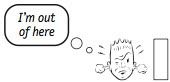
I'm out of here

As we can see from these examples, usability may be an often overlooked aspect of a website, but it can spell the difference between a successful sale and a lynch mob.

Unfortunately, usability is not my area of expertise so I couldn’t provide you with a comprehensive list of usability links. All I have is a link to another chapter of Don’t Make Me Think and the aforementioned useit.com site.

"Crab Mentality" and Internet Drama

[EDIT: This isn’t an in-depth look at “crab mentality” so I changed the title. The real in-depth look at the term is here.]

Yay, they finally said who they were. (Spoiler: it’s DDB)

Issue resolved too quickly for your taste? Here’s another lulz-y issue. :D

One of the common annoying things about the past few blogosphere-buzzes-of-the-week is when people use the term “crab mentality” to defend the target of the issue.

It’s just… well.. feels wrong to use them in those instances.

Take for example the (I’m not naming names here :P ) one about the teenage girls who arrogantly maul the English language without even knowing it or the one about the high class people who arrogantly maul the intelligence of those who witness their… whatever. We aren’t laughing at them because we are insecure that we are not as popular or [insert positive trait here] as them so we want to drag them down. It’s simply because there’s something really funny about what they’re doing and they should be able to take the hint. I’d admit, some of the insults are going too far, but if you really know what you’re doing, you should at least know that striking back with something as pathetic as “crab mentality” won’t go anywhere.

Or that judging fiasco/drama. I won’t say much about the issue because, like /b/-tards, white knights are everywhere and nakakatamad mag-delete ng mga walang kwentang comment. I’ll just say that the “crab mentality” attack is directed to the wrong people.

And now the Ako Mismo. No, we’re not scrutinizing the privacy policy and questioning the amount of sensitive information needed by the site because we are selfish bastards who don’t want the country to get out of its current state. We’re just concerned about identity theft. You know, the one where people can pose as you and steal all your money because they know your private information? Oh wait, you’re not working for the food on your family’s plate so I guess you can’t understand what’s in stake here.

The only issue wherein “crab mentality” makes sense is the The Great Book Blockade of 2009, and even the scope of that issue isn’t that clear yet.

The lesson here?

Kids these days are more pathetic at flame wars than back when we were pathetic kids.

More Ako Mismo

ABS-CBN News couldn’t even figure out who’s behind this so there’s nothing else we could do but speculate…

So far, we only have a few facts regarding AkoMismo.org:

First, the domain “AkoMismo.org” is owned by an ad agency, Tribal DDB. This supports the theory that this campaign is for the 21st Ad Congress as mentioned in Martin’s post.

Second, the IP address “125.5.116.82”, as pointed out in YugaTech, is owned by PLDT. This supports the theory that this is for a political campaign for Manny Pangilinan, PLDT Chairman.

However, Smart denies any involvement in this.

While thinking about this issue, I remembered that PLDT provides static IP addresses in their business solutions packages. PLDT owns the entire 125.5.*.* range, but it’s possible that they’re just the ones managing and leasing the IP address.

After a bit of brute forcing, I found out that Infocom/PLDT leases out IP addresses under that range to other entities. For example, 125.5.114.58 is for Mindanao Daily Mirror, a newspaper based in Davao City. Another is 125.5.123.40 which is used by GlyphStudios, Inc. for BUZZ.

By now we should be sure that PLDT doesn’t own AkoMismo if not for one catch: there are no other websites using the 125.5.116.* range. On the other hand, the 125.5.114.* and 125.5.123.* ranges contain multiple websites from different companies.

It is still possible that PLDT actually owns the range for their own use because otherwise the APNIC result would show who they’re leasing the range to. For example, Z-Zone Games owns the 125.5.2.* range and the inetnum in the APNIC hit is different from AkoMismo’s result.

In short, we’re back to “it’s DDB leasing a PLDT IP address for their site” vs. “it’s PLDT hiring DDB to run their campaign” and “it’s a political phishing scam” vs. “it’s an unintentional mistake from an honest advocacy group”.

Ako Mismo and Plurk Search

I’m taking a break from all this SE/Management idea bashing to move on to another type idea bashing. :D

The blogosphere-buzz-of-the-week for this week is about Ako Mismo (I myself in Tagalog) an advocacy campaign urging people to pledge something for the country. A lot of people have seen their commercials due to the Hatton/Pacquiao match last Sunday.

As expected from people living in one of the most corrupt countries in the world and looking for any slivers of hope they can find, a lot of people signed up. Obviously, some of them are bloggers. However, as expected from people living in such a country, some people need to wait and see if the campaign is not corrupt itself before signing up. Again, some of these people are bloggers too (including Martin, a classmate back in grade school whose blog name coincides with the campaign name, effectively putting him on top of Google’s results :D ). One of the more critical and popular blog posts about Ako Mismo is from a forwarded email to Gang Badoy, founder of another advocacy group Rock Ed.

As I see it, Ako Mismo’s success will depend on whether the doubt spreads like a wildfire in Plurk and Multiply. This is a one-sided memetic competition — with no spokespersons or avenues to answer criticisms raised against them (at least, as of this writing), Ako Mismo’s only defense against the doubters is the sheer number of people who are ignorant of the criticisms raised against them. If for some reason (because IMHO this is unlikely) the doubt reaches critical mass in the blogosphere before they open avenues other than their website, they will suffer the same fate as Sony did when they tried to use viral marketing three years ago for the PSP.

Coincidentally, Plurk just rolled off their version of real-time search today. IMO, this is one of the “fronts” that can be used by the doubters to spread their thoughts. People will use the search to find info about Ako Mismo. The search result will likely influence the searcher: if the results are purely people talking about the campaign, even if it’s just people wanting a dog tag, the searcher will probably be enticed to sign up. However, if the results are discussions about the authenticity of the goals of the campaign or links to the forwarded email, the searcher will think twice about the campaign and might even re-plurk the links.

The fun part here is that even just a small group of people can influence those search results. :D

I am personally tempted to do so even just to see how many people will use the new search function for Plurk, but I’d prefer to sit this one out.

My personal thoughts on Ako Mismo below the cut.

Continue reading “Ako Mismo and Plurk Search”

Missing Books in Personal MBA?

I’m sleepy so I’m going to make this short.

Ever wonder why some popular books are missing from the Personal MBA list? For example, both Built to Last and Rich Dad, Poor Dad are international bestsellers and yet they aren’t included in the list.

I don’t really know the exact process on how they choose books in Personal MBA, but I can see why those two types of books aren’t on the list.

Built to Last, In Search of Excellence, Good to Great, and practically every Toyota, Google, Starbucks, or [Insert big company or CEO here] book has been ripped apart by The Halo Effect. While the latter does not really turn all of those books into paperweights, it prevents you from having delusions that reading and following those books alone will turn your company around. (In some cases, THE does turn those books into paperweights, but I think you get the point. :P )

Robert Kiyosaki’s books, on the other hand, have been criticized by financial experts ever since Rich Dad, Poor Dad was released. Probably the most popular criticisms of RDPD in the Internet is John T. Reed’s criticism. I dare you not to be disillusioned about the book after reading that site. :D

As for other books, I think I can safely assume that they either have better alternatives already on the list or the book is still haven’t caught the attention of the PMBA community yet. Either way, if a book is missing on the list, it doesn’t doesn’t necessarily mean that it’s not useful. Continuing with the disclaimers, I won’t claim the list as infallible (I see a couple of books that aren’t applicable to our country).

In the end, whether or not you decide to follow the list when buying books, always read the books you buy with both an open and a skeptical mind.